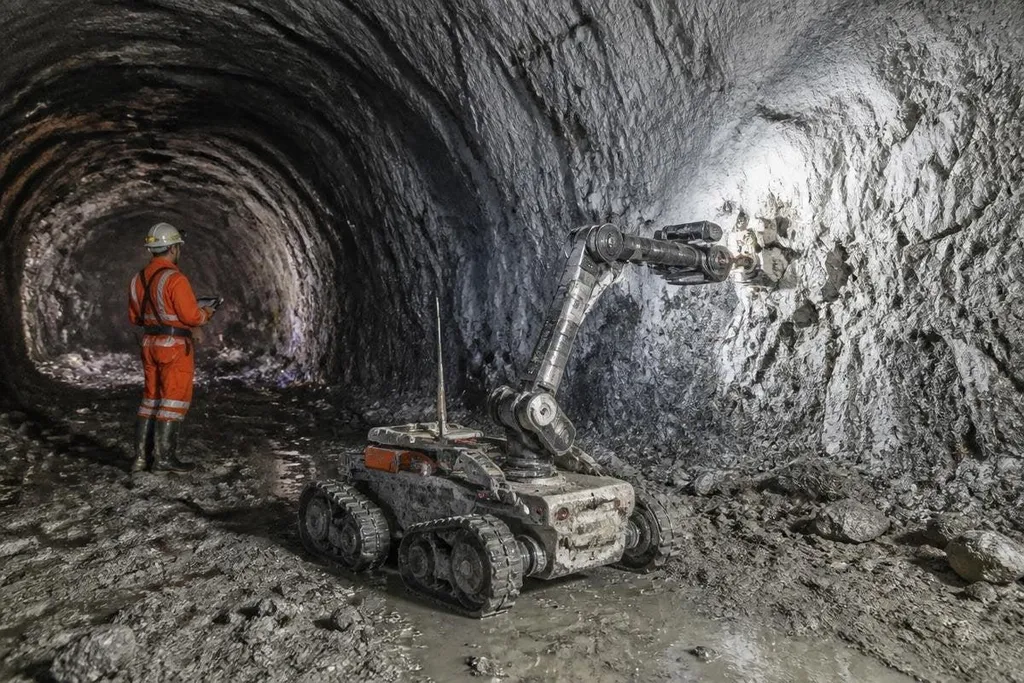
A mining robot can enter a tunnel after a blast, inspect a wall, or carry sensors through heat and dust. That changes the safety question from “Can a person do this?” to “Does a person need to enter at all?”
This matters most for the mining supervisor deciding where automation can remove exposure, rather than where it can replace an entire crew.
- Robots inspect areas that may still contain loose rock or gas.
- Remote control keeps people away from the first pass into a hazard.
- Human workers still make the final call on many uncertain conditions.
Where robots reduce exposure
Mining creates risks that can change from one section of a site to the next. Loose ground, blasting fumes, water, poor visibility, heavy vehicles, and high temperatures can make a routine task unsafe. Before a worker follows, the robot can take sensors or cameras into that space.
Inspection is one of the clearest uses. A tracked robot can carry cameras, gas sensors, thermal sensors, or mapping equipment through a tunnel. The operator can check the video and sensor readings from a safer location. That first pass may show damage, standing water, smoke, or a blocked route before anyone walks in.
Distance provides the safety gain. The robot does not remove the hazard, but it can keep a person outside it during the first check. That matters after blasting, roof movement, equipment failure, or a fire, when conditions may differ from the last inspection.
Remote control comes before full autonomy
Many mining robots still need a person to guide them. Remote operation means the machine handles movement and sensing, while an operator chooses where it goes and what it examines. This setup can work in places where wireless signals, dust, terrain, or changing light make independent operation unreliable.
Autonomous systems can take on narrow tasks. They may follow a mapped route, stop when a sensor detects a limit, or return to a charging point. Those functions reduce the time a person spends near moving equipment or unstable ground, but they depend on safe maps, working sensors, and clear rules for failure.
A robot that stops in a safe place is easier to manage than one that keeps moving after losing a camera feed. Mining teams need recovery plans for low battery, blocked tracks, damaged sensors, lost communications, and unexpected people or vehicles in the work area.
The limits are physical
Dust can cover cameras. Water can damage electronics. Rock can block a path. Metal structures can weaken radio signals.
A robot built for a clean factory floor may fail quickly in a mine unless its housing, wheels, tracks, sensors, and communications system match the site.
The machine also needs a useful task. Sending a small robot into a tunnel sounds sensible until its camera cannot show the roof clearly, its battery runs out before the return trip, or a worker must enter anyway to retrieve it. The safety result then depends on the full process, not the robot alone.
Training matters too. An operator needs to understand the robot’s sensor limits and the site’s hazards. A clear video feed can still miss a weak section of roof. A gas reading can show a problem without explaining how the gas moved through the tunnel.
Mining safety claims need the robot, tunnel, task, test date, and human checks named. Robot24.com mining robotics reporting can put those details beside a claim about remote work underground, so you can judge what was tested before a person enters the area. The rollout plan starts there: with a named task and a clear handoff.
What a sensible rollout looks like
A mine can start with a task that has a clear route, a clear success measure, and a known reason to keep people away. Inspection after blasting is easier to assess than a broad promise to automate underground work.
The team should compare the robot’s results with the current method. Did it find the same damage? Did it reduce entries into a restricted zone? How long did setup, operation, recovery, and cleaning take? Those answers show whether the machine changes risk in practice.
I'd choose a slower robot with a clear recovery plan over a faster one that leaves the crew guessing after a signal loss.
Use this checklist before putting a robot into a mine:
- Name the hazard: Write down the exposure the robot should reduce.
- Set the task: Define the route, sensors, operating time, and safe stopping point.
- Test communications: Check radio or network coverage along the full route.
- Plan recovery: Decide who retrieves the robot and how they do it safely.
- Record the result: Compare robot findings, worker entries, faults, and delays.
- Set the limit: State the conditions that require a trained person to take over.
What happens next
Mining robots will first change safety by taking on specific entries, inspections, and monitoring jobs. The useful measure is the number of hazardous exposures removed, not the number of autonomous features listed in a brochure.
For a mine manager, the next decision is practical: choose one dangerous task, measure the current exposure, and check if a robot can complete that task without creating a new one.